If you’re like most entrepreneurial leaders I work with, you’re spinning a lot of plates. You’re moving fast, solving problems constantly, and trying to keep your team aligned while the business grows more complex every quarter.
And when someone on your team misses their number, again, it creates a new layer of stress you don’t need.
Suddenly you’re wondering:
- “Should I address it?”
- “Do I soften it so they don’t get defensive?”
- “Is it worth the conflict?”
- “Why does this keep happening?”
- “Is this a people issue, a process issue, or a me issue?”
Let me say this clearly:
That’s where data comes in.
When your team runs on data instead of emotions, something shifts. The conversation becomes clearer. The tone becomes calmer. And the responsibility becomes shared, not carried only by you.
Here’s how to have a healthy conversation next time someone on your team misses their number.
1. Start with Curiosity, Not Frustration
When you’re stressed or overloaded, it’s natural to feel disappointed when someone doesn’t deliver. But starting the conversation with emotion rarely helps.
Instead, open with a simple, judgment-free question:
“Walk me through what happened this week.”
This releases pressure immediately. It signals:
- You’re here to understand
- You’re invested in their success
- You’re not attacking their character
You’ll learn more in the first 60 seconds of curiosity than in 10 minutes of lecturing.
2. Stick to the Facts, Not the Feelings
When you’re exhausted or overwhelmed, conversations can easily slip into frustration, assumptions, or stories.
But numbers cut through all of that.
For example:
- “The goal was 10 demos. We hit 6.”
- “Our on-time delivery target is 95%. Last week was 82%.”
Facts lower the emotional temperature.
Facts keep the focus on the work, not the person.
Facts make the next step clear.
And (big win for you) facts reduce the drama you’re forced to manage.
3. Determine Whether It’s a One-Off or a Pattern
This step is a sanity-saver for business owners because it prevents overreacting and underreacting.
Here’s a good rule of thumb:
▶ One missed number = a conversation
▶ Two missed numbers = a concern
▶ Three missed numbers = an Issue to bring up during your next Level 10 Meeting
Once it becomes a pattern, you’re no longer talking about a bad week. you’re talking about a deeper root cause.
This is where you get to stop guessing and start solving.
4. Solve It Together Instead of Carrying It Yourself
You may not realize it, but many business owners carry the burden of performance alone. You spot problems, diagnose them, and even try to fix them yourself.
That’s exhausting.
Instead, shift to a shared-responsibility mindset:
Use IDS (Identify, Discuss, Solve) with the team member:
Ask questions like:
- “What’s really getting in the way?”
- “Is this a clarity issue?”
- “Is this about capacity or skills?”
- “Is this a process breakdown we haven’t seen yet?”
When you do this, two powerful things happen:
- You stop owning the entire issue.
- The team member becomes part of the solution.
You walk away lighter, not heavier.
5. Reinforce the Standard AND the Support
This is where your leadership sets the tone for the entire culture.
End the conversation with these two truths:
Truth #1: “I’m here to help you win.”
Truth #2: “This number matters, and we need you to hit it.”
You’re supportive, but you’re also clear.
You’re calm, but you’re not compromising.
You’re compassionate, but you’re not lowering expectations.
This combination creates a healthy, accountable culture, without you having to be the bad guy.
Why This Matters for You
The more you rely on data, the easier leadership becomes.
Because data:
- Removes emotion
- Removes guesswork
- Removes conflict
- Removes excuses
- Removes stress
You don’t have to be the enforcer.
You don’t have to carry the weight of every issue.
You don’t have to babysit performance.
When the company runs on data, you finally get to stop leading through tension and start leading through clarity.
Ready to Strengthen Your Data Component?
If conversations like this feel draining. or you know your Scorecard, measurables, or accountability structure could be stronger, there’s a simple next step.
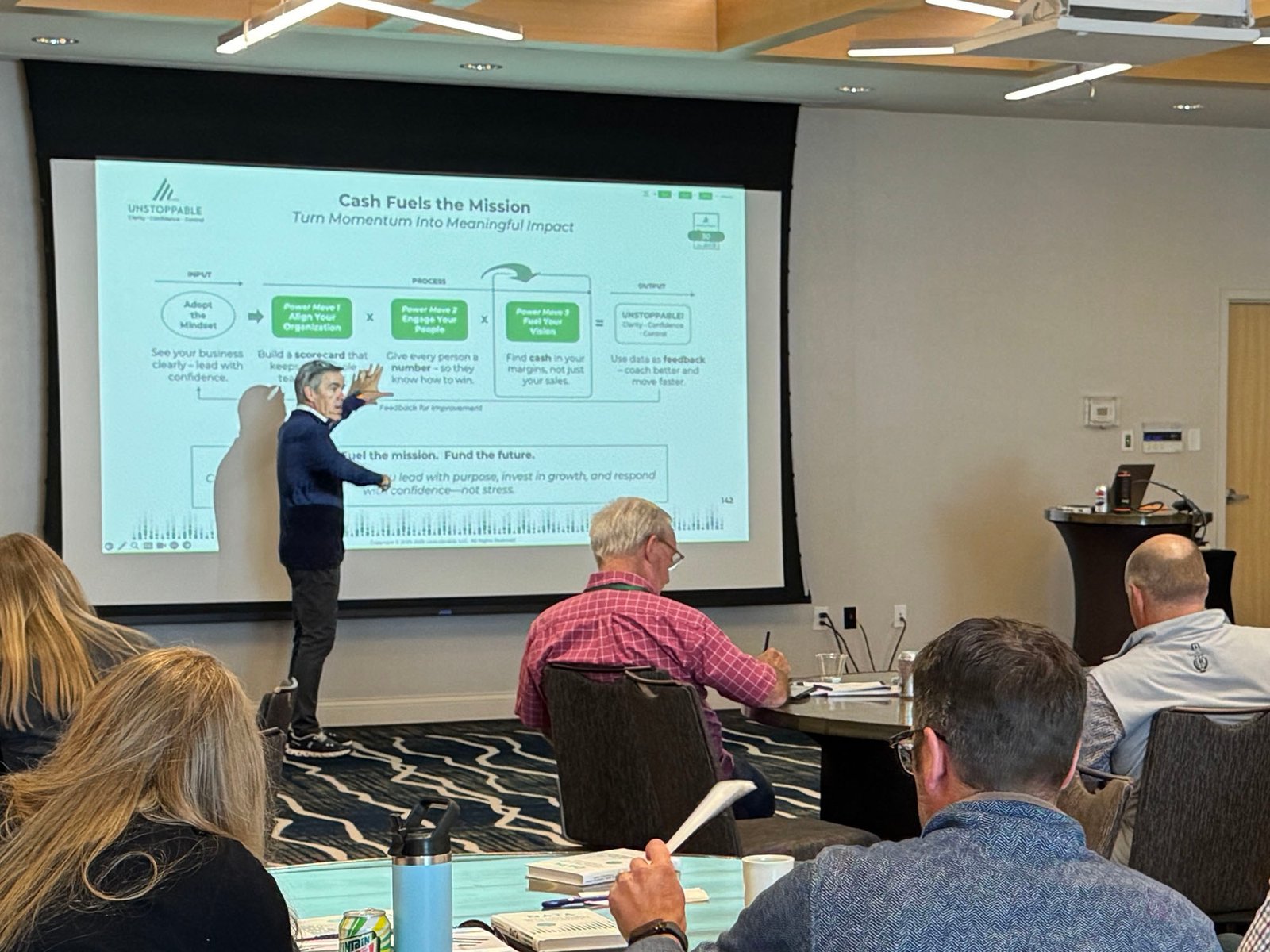
Register for the upcoming Data Workshop.
You’ll learn how to:
- Build a Scorecard that works
- Give every person a number
- Use data to reduce drama
- Make accountability natural
- And run a business that’s predictable instead of stressful
Want more data-driven leadership tools?
Follow me, Mark Stanley, on LinkedIn for daily insights to help you lead with more clarity, confidence, and control.