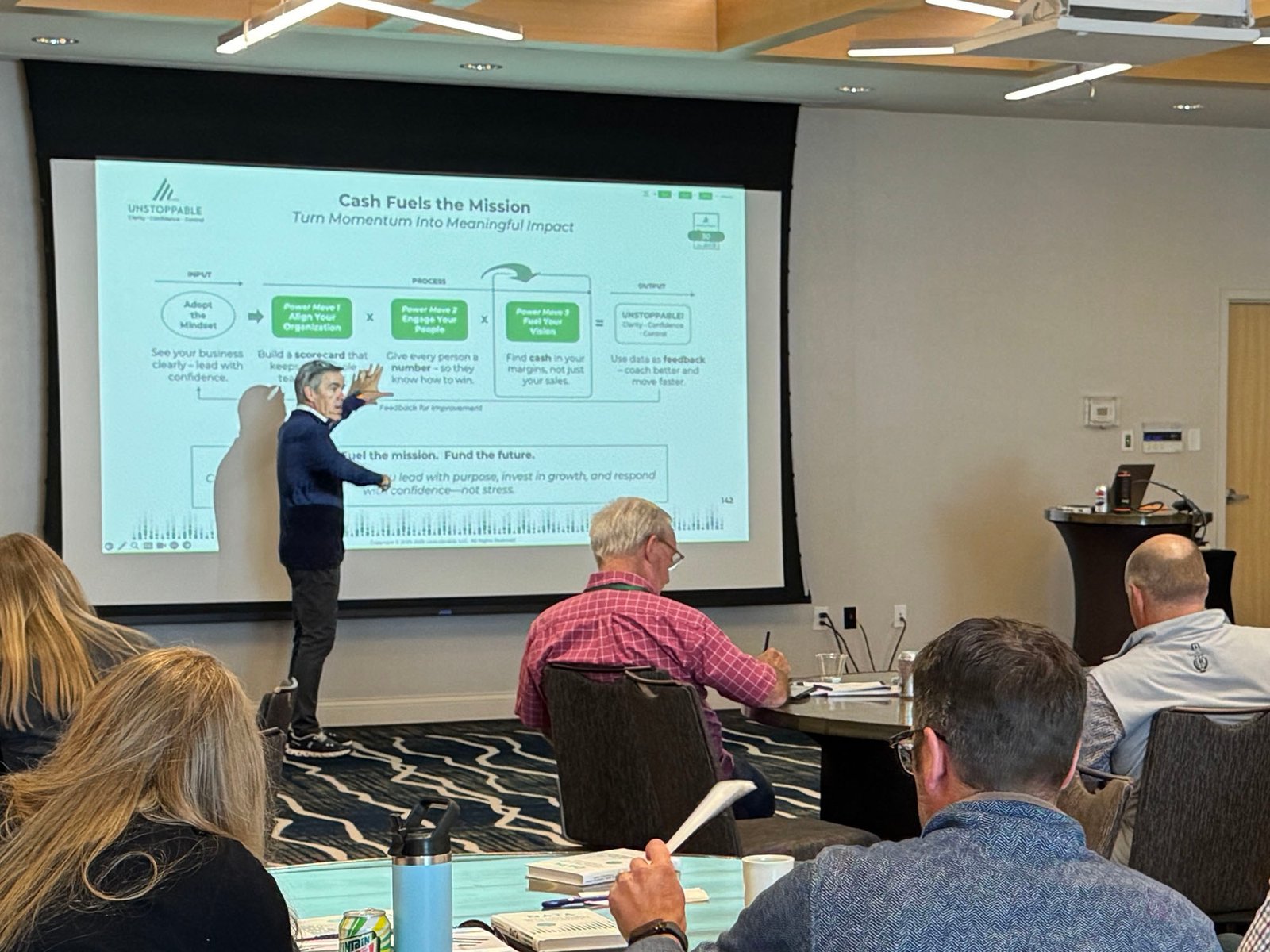
You and I have both seen what happens in a meeting when there’s no scoreboard.
Someone says, “Sales feels soft.”
Then, someone else says, “No, it’s fine, I’ve got a good feeling the team is going to turn it around this week.”
Then the room starts arguing… and an hour later, you still don’t have a decision.
That’s not a leadership problem. That’s a data problem.
Here’s what I’ve learned working after working with a few entrepreneurial companies:
When you have the right numbers, you stop guessing.
And when you stop guessing, you start moving.
Why data creates confidence
Confidence isn’t a personality trait. It’s earned.
You earn it when you can answer one simple question before you decide anything important: “what do the numbers say?”
When you have a small set of weekly, activity-based Measurables, you get a real pulse on your business.
Not a vibe, not a theory, and not last month’s financial statements.
The right Scorecard gives you visibility and helps you stay proactive instead of reactive.
And the best part? Data actually calms the room down.
Instead of debating opinions, your team starts looking at reality together. That’s where trust grows. That’s where accountability gets cleaner. That’s where leaders sleep better.
Why confidence creates speed
Once the numbers are on the table, the conversation changes.
- You don’t have to wait for the loudest voice to win.
- You don’t have to “talk it out” forever.
- You don’t have to re-litigate the same issue every week.
You simply look at the Scorecard and say: On Track or Off Track?
If it’s Off Track, you drop it to the Issues List and solve it.
That’s speed.
Not reckless speed — just disciplined speed.
The “15-Number Rule” (and why it works)
If you’re thinking, “We track a million things,” let me save you some pain:
A great Scorecard is one page with five to 15 weekly numbers that predict results. Less than that and you miss blind spots. More than that, and you invite analysis paralysis.
And there are four rules that make it work in the real world:
- Make them weekly and activity-based (leading indicators, not lagging results).
- Assign one owner per number (shared ownership gets fuzzy fast).
- Set a clear weekly goal so everyone knows what “winning” looks like.
- Review it every week in your Level 10 Meeting and IDS anything Off Track.
Do that consistently and you’ll feel the shift: less drama, fewer surprises, faster decisions, and more traction.
Want help building a Scorecard that actually works?
If you’d like hands-on help building your Measurables and tightening your Scorecard, register for the next Data Workshop.
It’s a full-day, practical workshop focused on building Scorecards, creating Measurables that drive performance, and using data to spot issues before they become emergencies.
I’d really love to see you there.